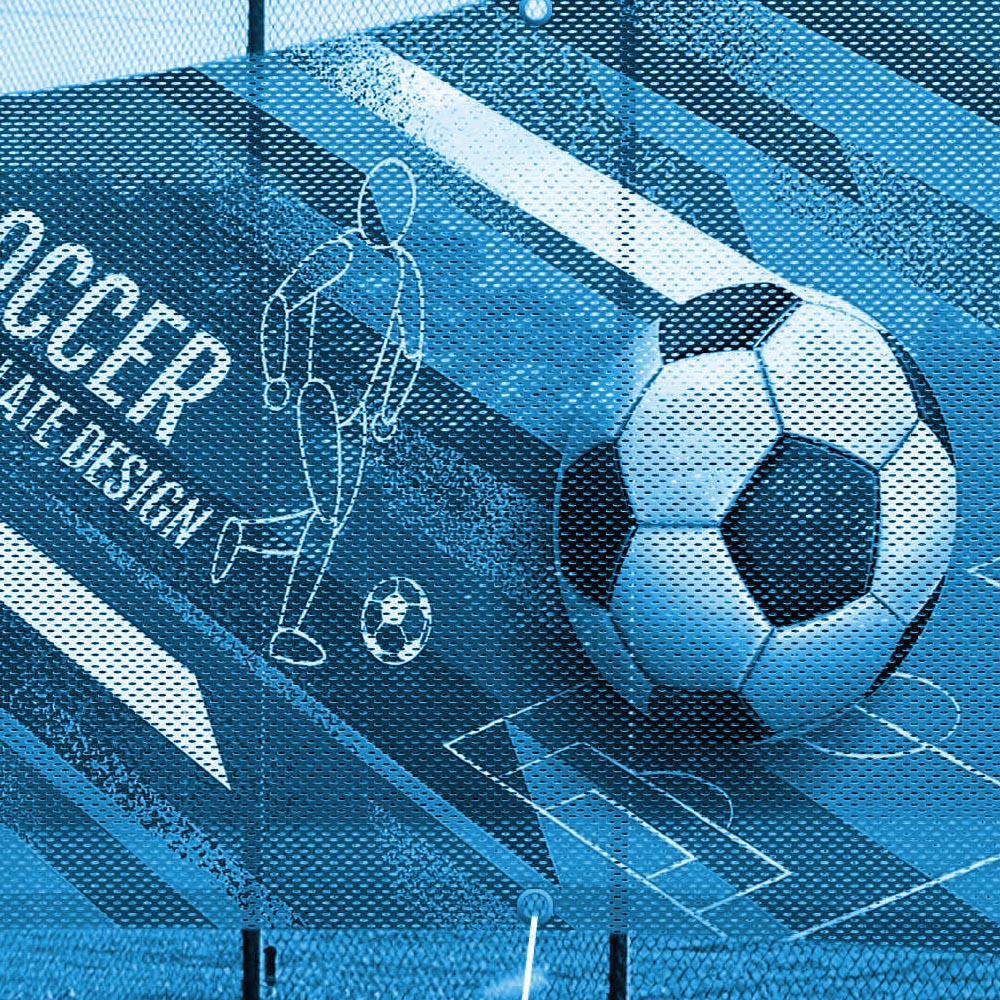
Sports fences are needed anywhere players, spectators, and equipment share the same space, especially in busy complexes where games run back-to-back. These sport fences keep balls inside the field, protect fans and passing pedestrians, and create clear boundaries so play stays safe and organized. They also create the perfect structure for banner installs, turning plain fencing into sponsor space, team branding, and event messaging. You’ll see them at baseball and softball parks, pickleball courts, soccer and football fields, lacrosse areas, and multi-sport facilities that host several activities on the same footprint.
Fence height depends on the sport and how far balls can travel. Perimeter sport fencing is commonly 4 feet, 6 feet, or 8 feet tall for crowd control and field boundaries, and those runs are ideal for long sponsor banner displays. Baseball and softball often call for extra-large, humongous backdrops—frequently 20 to 30 feet—plus taller sections behind home plate and along foul territory, and some sites add overhead netting for extra protection. Pickleball typically uses 10 to 12 foot sport fencing around courts to keep balls contained, while soccer fields may use 6 to 8 foot fencing with taller panels behind goals in tighter parks, where banners can be used for sponsors, rules, and wayfinding.
Chain-link remains the most common choice for a sports fence because it holds up, installs efficiently, and is easy to repair, and it’s also one of the easiest fence types to attach banners and banner screens to. Many facilities choose galvanized chain-link for corrosion resistance or PVC-coated chain-link—often black or dark green—for a cleaner look and better visibility for players. Welded-wire panels are used when a stiffer sports fence is preferred, and netting systems made from nylon or high-density polyethylene are common behind goals or above backstops to stop high shots without building heavier sports fence framing. All of these fence systems can be paired with banners, sponsor panels, and windscreen-style banner screens.
“Blockage” usually refers to windscreens or fence screens added to the fence, not the fence itself, and these are often ordered as banner screens for athletic facilities. Windscreens are commonly offered in the 70% to 90% blockage range, which helps cut wind, reduce glare, and limit visual distractions while still allowing airflow. Dark green and black are popular because they keep attention on the game and make the ball easier to track, but navy, royal blue, maroon, and custom colors are also common for school branding. Where privacy matters—like practice courts near parking lots—facilities often choose higher-blockage banner screens to reduce sightlines while adding a clean, uniform look.
A well-planned sports fence makes a facility safer, easier to manage, and better looking on game day, and banners take that setup to the next level by adding branding and sponsor visibility. It reduces lost balls, prevents injuries from stray shots, protects nearby property, and guides foot traffic with clear entry and exit points. Whether it’s a tall baseball backstop, a 10- to 12-foot tennis enclosure, or a screened soccer perimeter, the right banner and banner screen layout delivers an organized, professional feel that looks great for players, fans, and photos.
Sports fences are needed anywhere players, spectators, and equipment share the same space, especially in busy complexes where games run back-to-back. These sport fences keep balls inside the field, protect fans and passing pedestrians, and create clear boundaries so play stays safe and organized. They also create the perfect structure for banner installs, turning plain fencing into sponsor space, team branding, and event messaging. You’ll see them at baseball and softball parks, pickleball courts, soccer and football fields, lacrosse areas, and multi-sport facilities that host several activities on the same footprint.
Fence height depends on the sport and how far balls can travel. Perimeter sport fencing is commonly 4 feet, 6 feet, or 8 feet tall for crowd control and field boundaries, and those runs are ideal for long sponsor banner displays. Baseball and softball often call for extra-large, humongous backdrops—frequently 20 to 30 feet—plus taller sections behind home plate and along foul territory, and some sites add overhead netting for extra protection. Pickleball typically uses 10 to 12 foot sport fencing around courts to keep balls contained, while soccer fields may use 6 to 8 foot fencing with taller panels behind goals in tighter parks, where banners can be used for sponsors, rules, and wayfinding.
Chain-link remains the most common choice for a sports fence because it holds up, installs efficiently, and is easy to repair, and it’s also one of the easiest fence types to attach banners and banner screens to. Many facilities choose galvanized chain-link for corrosion resistance or PVC-coated chain-link—often black or dark green—for a cleaner look and better visibility for players. Welded-wire panels are used when a stiffer sports fence is preferred, and netting systems made from nylon or high-density polyethylene are common behind goals or above backstops to stop high shots without building heavier sports fence framing. All of these fence systems can be paired with banners, sponsor panels, and windscreen-style banner screens.
“Blockage” usually refers to windscreens or fence screens added to the fence, not the fence itself, and these are often ordered as banner screens for athletic facilities. Windscreens are commonly offered in the 70% to 90% blockage range, which helps cut wind, reduce glare, and limit visual distractions while still allowing airflow. Dark green and black are popular because they keep attention on the game and make the ball easier to track, but navy, royal blue, maroon, and custom colors are also common for school branding. Where privacy matters—like practice courts near parking lots—facilities often choose higher-blockage banner screens to reduce sightlines while adding a clean, uniform look.
A well-planned sports fence makes a facility safer, easier to manage, and better looking on game day, and banners take that setup to the next level by adding branding and sponsor visibility. It reduces lost balls, prevents injuries from stray shots, protects nearby property, and guides foot traffic with clear entry and exit points. Whether it’s a tall baseball backstop, a 10- to 12-foot tennis enclosure, or a screened soccer perimeter, the right banner and banner screen layout delivers an organized, professional feel that looks great for players, fans, and photos.
Reviews
There are no reviews yet.